Prince Edward Island
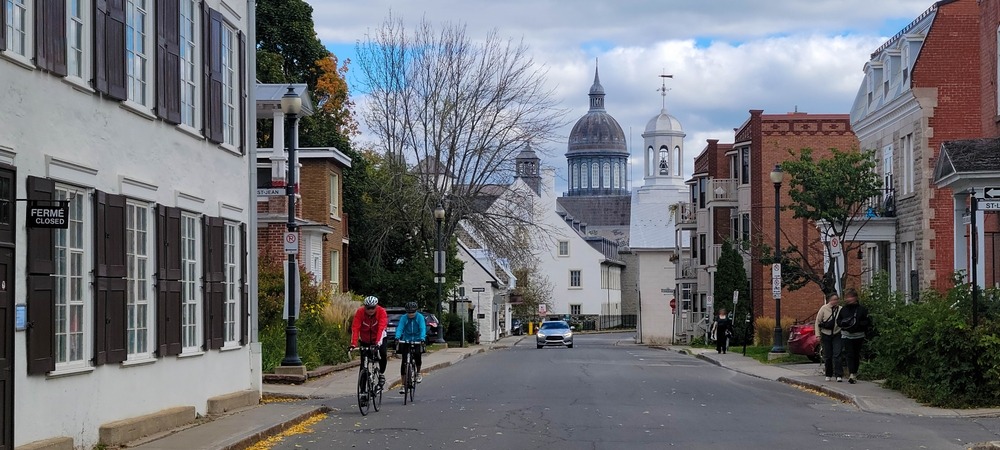
Prince Edward Island is Canada's smallest province, yet it commands attention through the singularity of its landscapes. Red sandstone cliffs, rolling fields that slope toward the sea, and fishing villages with Victorian facades give it an immediately recognizable visual character.
Prince Edward Island is Canada's smallest province, yet it commands attention through the singularity of its landscapes. Red sandstone cliffs, rolling fields that slope toward the sea, and fishing villages with Victorian facades give it an immediately recognizable visual character. This preserved setting, combined with a particular rhythm of life, makes it a distinctive destination within the Canadian landscape.
History
Inhabited for approximately 10,000 years by the ancestors of the Mi'kmaq, the island subsequently experienced French colonization in the early 18th century before falling under British control. The deportation of the Acadians in 1755 left a lasting mark on the province's collective memory, as did its reluctant entry into Canadian Confederation in 1873, driven by accumulated debts rather than genuine political will.
This past has forged something difficult to name elsewhere in Canada: a quiet island pride—that of a human-scaled territory where agriculture, fishing, and tourism still rhythm daily life, and where residents seem to have chosen to remain rather than to be held captive by their island.
What to See on Prince Edward Island?
Prince Edward Island National Park
The park protects a remarkable stretch of the northern coast, with its dunes, beaches, and characteristic red sandstone cliffs. It divides into three distinct sectors—Cavendish-North Rustico, Brackley-Dalvay, and Greenwich—each with its own trails and vistas. At Cavendish, the Green Gables estate allows fans of L.M. Montgomery's work to walk the very grounds that nourished the author's imagination.
Charlottetown
The provincial capital, Charlottetown is a human-scaled city with well-preserved historical character. Much of the city's prominence stems from the 1864 conference, which Province House, a national historic site, commemorates. Around it, the pedestrian Victoria Row and Peake's Wharf give Charlottetown its daily vitality.
Scenic Routes
The island's coastal roads rank among its most distinctive assets. The Green Gables Coast and the Red Sands Coast traverse fishing villages, rolling farmland, and offer views of the Confederation Bridge. It is at this pace that the island truly reveals itself.
The North Cape Region and Eastern Points
At the western extremity, North Cape offers wild coastal scenery and rugged shorelines far from tourist bustle. In contrast, the eastern points distinguish themselves through their lighthouses, quiet beaches, and fishing communities discovered along a coastal circuit.
What to Do on Prince Edward Island?
Hiking and Cycling
The Confederation Trail crosses the island over 449 kilometres, from Tignish to Elmira, on a flat, accessible route suitable for both cyclists and walkers. The national park also offers several trails, including the 6.7-kilometre Homestead Trail, which traverses the park's different ecosystems.
Beaches and Water Activities
The island boasts more than 50 beaches, ranging from the most frequented to the most secluded. Those at Cavendish and Greenwich are the best known, while Basin Head provincial park beach distinguishes itself through its sand that squeaks underfoot—a rare phenomenon due to the exceptional purity of its quartz. The calm-watered bays lend themselves well to kayaking and water sports.
Culture and Festivals
The island possesses a vibrant cultural scene, driven notably by its Celtic and Acadian musical traditions. Festivals punctuate the calendar year-round, and several museums trace the island's history from Mi'kmaq culture through the traditional fishing and agriculture industries.
When to Visit?
Despite its northern location, Prince Edward Island benefits from a relatively mild climate. Summers are pleasant, with temperatures hovering around 23°C in July and August, occasionally exceeding 30°C. Winters are cold and snowy, with average temperatures around -3°C and abundant snowfall. Spring is marked by frequent storms caused by interactions between Arctic and Atlantic fronts.
The period from June to September remains the most favorable for visiting the island, with full access to beaches and tourist services. Spring and autumn appeal more to those seeking a quieter atmosphere, colorful landscapes, and an island returning to its natural rhythm, away from summer crowds.
Prince Edward Island is accessible via three main entry points: air, road, and sea. Its crescent shape offers appreciated flexibility: it is entirely possible to enter the island at one point and leave from another according to your chosen itinerary.
By Air
Charlottetown Airport is the island's primary air entry point, with direct flights and connections from major Canadian cities.
By the Confederation Bridge
From New Brunswick, the Confederation Bridge links the mainland to Borden-Carleton on the island's southwest coast. At 12.9 kilometres long, it can be crossed in approximately ten minutes by car. A shuttle service is available for cyclists and pedestrians. Note that tolls are collected only upon departure from the island.
By Ferry
From Nova Scotia, a ferry service connects Caribou to Wood Islands in approximately 75 minutes—a crossing that constitutes a fine introduction to the island itself. A second service operates from Souris to the Magdalen Islands' Cap-aux-Meules, offering an interesting option for those arriving from Quebec.
By Cruise
Charlottetown's port is a sought-after stop on New England cruise itineraries, making it an original gateway for discovering the island.
By Bus
Daily bus services connect Charlottetown and Summerside to major Maritime cities. For those coming from farther afield, it is possible to reach Moncton and Halifax by train from Montreal, then take a bus or rent a car to reach the island.
The island is small and easy to navigate, but a car remains essential for freely exploring its different coastal regions and parks. The public transportation network is limited and covers only the main population centres.
By Car
This is the most suitable way to discover the island at your own pace. Rental services are available at Charlottetown Airport and at several locations throughout the province.
By Public Transit
An urban network serves Charlottetown, Summerside, and their surroundings, as well as certain rural destinations and the northern coast in summer. However, it remains insufficient to cover the entire island.
By Taxi
Taxis are available and relatively accessible in major towns. Fares are typically calculated based on distance and number of passengers, without a meter.