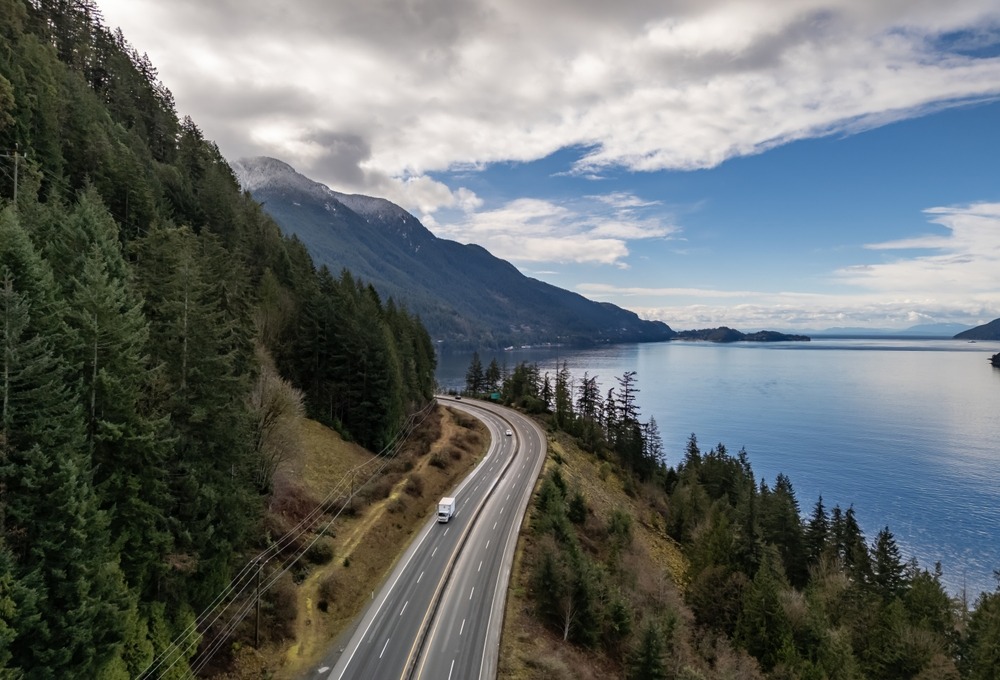
Quadra Island
Quadra Island
The largest of the Discovery Islands, Quadra combines coastal forests, Kwakwaka'wakw heritage and three villages, just ten minutes by ferry from Campbell River.
Off the east coast of Vancouver Island, Quadra Island forms the largest of the Discovery Islands, an archipelago running along the Inside Passage. Its three villages, forested landscapes and strong Indigenous identity make it a singular stop in Canada's Pacific Northwest, accessible from Campbell River in just minutes by ferry.
Why visit Quadra Island
Quadra brings together on a compact territory what coastal British Columbia offers most authentically: temperate rainforests, rocky beaches, spectacular tidal currents, the vibrant presence of the Kwakwaka'wakw First Nations, and an active artistic community. With approximately 2,700 permanent residents, the island maintains a genuinely local atmosphere, far removed from standardized beach destinations. The short ferry crossing from Campbell River, requiring no advance reservation, makes it an easy escape to add to a Vancouver Island itinerary.
History of Quadra Island
Indigenous presence and Kwakwaka'wakw heritage
Long before European arrival, Indigenous peoples already inhabited the region. In 1792, British captain George Vancouver visited Cape Mudge village and documented a community of approximately 300 people. By the late 19th century, the We Wai Kai band of the Laichwiltach people, belonging to the Kwakwaka'wakw First Nation, became permanently established at Cape Mudge, known as Yaculta.
In 1922, colonial authorities confiscated the community's ceremonial objects as part of the potlatch ban. These items were not returned for roughly fifty years, and the Nuyumbalees Cultural Centre was founded to house and transmit them.
From the Nootka Crisis to the ferry
The Nootka Crisis pitted Spain against Great Britain over sovereignty of the region in the late 18th century. It was resolved by the Nootka Conventions, then the Oregon Treaty of 1846 fixed territorial borders. The island received its official name in 1903, honouring Spanish navigator Juan Francisco de la Bodega y Quadra. The arrival of the vehicle ferry in 1960 marked an economic turning point: the island became more accessible and tourism developed.
What to see and do on Quadra Island
The three villages
Quadra is organized around three villages: Cape Mudge (Yaculta), the historic home of the We Wai Kai band, Quathiaski Cove, the most populated and commercial hub of the island, and Heriot Bay, the departure point for the other Discovery Islands and mainland inlets.
Nature and the outdoors
- Rebecca Spit Provincial Park: a long narrow stretch of land with shingle beaches, trails and views over the strait.
- Chinese Mountains: hiking trails overlooking Vancouver Island forests and the coastal mountain range.
- Surge Narrows: a maritime passage with some of the most powerful tidal currents on the west coast, best observed at tidal changes.
- Kayaking and diving: the coastline is home to diverse marine life, accessible through guided trips departing from Heriot Bay.
Indigenous and historical heritage
- Nuyumbalees Cultural Centre: artifacts, Kwakwaka'wakw ceremonial masks and costumes, now repatriated, with presentations on local dialects and traditions.
- Cape Mudge petroglyphs: rock carvings attesting to human presence long before European arrival.
- Cape Mudge lighthouse and Heriot Bay inn: witnesses to the pioneer era, with the latter still operating.
Arts and local life
The island is home to a thriving artistic community. In early June, the artist studio circuit opens studios for visitors to meet creators. Galleries, local farms and a vineyard round out exploration through the seasons.
When to visit Quadra Island
- Spring (May–June): mild temperatures, low crowds, ideal for hiking and kayaking.
- Summer (July–August): the sunniest and warmest season, perfect for orca watching in the Inside Passage; peak crowds.
- Autumn (September–October): bright days, still-pleasant temperatures, favourable light for outdoor activities.
- Winter (November–March): rainy season with generally mild temperatures, suited to a quieter stay focused on heritage.
How to reach Quadra Island
The ferry from Campbell River
The main access is from Campbell River. The ferry links the mainland terminal to Quathiaski Cove roughly every 30 minutes; the crossing takes about ten minutes and requires no reservation. In summer, plan to arrive early.
By car
From Vancouver, take a ferry to Nanaimo (Tsawwassen–Duke Point or Horseshoe Bay–Departure Bay), then drive north on Highway 19 to Campbell River.
By air
Pacific Coastal Airlines, WestJet and Central Mountain Air serve Campbell River. A short shuttle then reaches the ferry terminal. From Seattle, Kenmore Air and Northwest Seaplanes offer direct floatplane service to the island.
By public transit
From Vancouver, take the SkyTrain then Translink express bus 257 to Horseshoe Bay, followed by the ferry to Nanaimo and IslandLink bus to Campbell River. The nearest stop to the terminal is at 401 11th Ave, a five-minute walk away.
Practical information
The island has no public transit. Several options are available on site:
- Car: the most flexible solution; rental available at Campbell River airport.
- Bike or e-bike: local providers deliver to ferries and accommodations.
- Taxi: two companies serve the island by reservation, with moderate fares.
Plan one to two days to cover the main sites, longer if you combine hiking, kayaking and cultural visits.
Nearby
Quadra is part of a network of natural stops in northern Vancouver Island and the Discovery Islands:
- Campbell River: gateway to the island, renowned for salmon fishing and bear watching.
- Cortes Island: the second major Discovery Island, accessible from Heriot Bay by ferry.
- Banff National Park: to extend your journey into the Rockies.
FAQ
Frequently asked questions
Plan your trip
Quadra fits naturally into an itinerary along Canada's west coast, blending nature, Indigenous culture and coastal villages. To build a custom trip including Vancouver Island and the Rockies, explore our Canada travel packages.
Interested in this visit?
We can include it in your personalised itinerary.