Thousand Islands
Thousand Islands
Binational archipelago on the St. Lawrence River between Kingston and Brockville: castles, national park founded in 1904, kayaking, sailing and historic wreck diving.
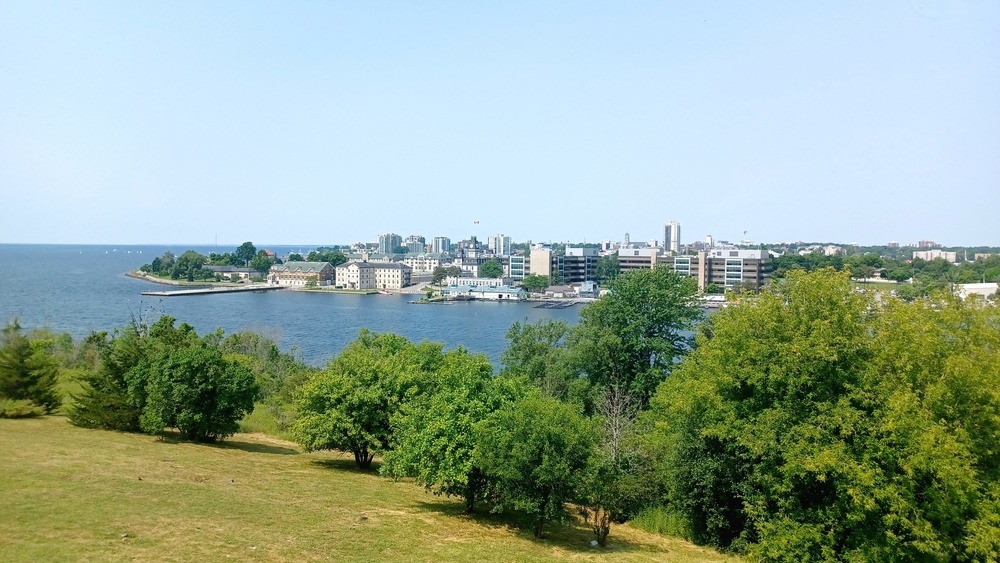
The Thousand Islands form an archipelago of approximately 1,800 islands and islets stretching across some fifty kilometres of the St. Lawrence River, between Kingston and Brockville on the Ontario side and New York State on the American side. Historic castles, submerged wrecks, forest trails and riverside villages make up a binational territory where built heritage, pleasure boating and protected nature converge.
Why visit the Thousand Islands
The archipelago brings together several assets rarely found in one place: remarkable architectural heritage (Boldt Castle, Singer Castle, Fulford Place, military forts), a national park founded in 1904, river landscapes ideal for kayaking and sailing, and an underwater heritage prized by divers. Proximity to Ottawa, Montreal and Toronto makes the region accessible for a short stay or as a stop on the route between Quebec and Ontario.
History of the Thousand Islands
The archipelago served as a camping and passage site for Iroquoian groups long before European arrival. Explorers, missionaries and fur traders later used these waterways, and colonial conflicts left their mark in place names: Navy, Admiralty, Endymion, Camelot and Mermaid recall British naval gunboats and maritime figures.
From the 1850s onward, resort hotels, religious camps and steamboat excursions attracted wealthy clientele, followed by the arrival of the railway. The creation of the St. Lawrence Islands National Park in 1904 established the region's heritage value and provided lasting protection for its landscapes. Today, tourism remains central to the local economy, with the archipelago retaining a substantial portion of its original nature and built heritage.
What to see and do
Castles and built heritage
Several cruises depart from Kingston, Gananoque and Rockport, allowing visitors to approach sites from the river before visiting on land.
- Boldt Castle – Heart Island (United States): an unfinished late 19th-century mansion, testament to the golden age of St. Lawrence vacationing. Access requires border crossing.
- Singer Castle – Dark Island (United States): neo-medieval architecture and carefully designed interior décor, less visited than Boldt.
- Fulford Place – Brockville: grand late 19th-century residence with riverside garden, representative of the vacation architecture of the era.
- Fort Wellington – Prescott: 19th-century fortification with exhibitions and reenactments of Canadian-American border conflicts.
- Fort Henry – Kingston: fort overlooking the river, parades and military reenactments in season.
- Upper Canada Village – Morrisburg: reconstructed historic village tracing 19th-century rural Ontario life.
Scenic views and nature
- 1000 Islands Tower – Gananoque: observation tower offering panoramic views of the archipelago's density.
- St. Lawrence Islands National Park: forests, rocky shores and islands accessible from Mallorytown Landing, the main entry point. oTENTik glamping and cabins available seasonally.
- Amherst Island: secluded island appreciated for its rural atmosphere and migratory bird watching, particularly wintering raptors.
On and under the water
- Kayaking, canoeing and paddleboarding to explore the islets at your own pace
- Sailing, particularly well developed around Kingston
- Sport fishing on the river and its channels
- Diving on historic St. Lawrence wrecks, one of the region's most distinctive activities
On land
- Hiking and cycling in the national park and along the Thousand Islands Parkway, particularly around Jones Creek, Landon's Bay and Mallorytown Landing
- Summer festivals in riverside villages
- Agritourism farms, tree adventure courses, helicopter rides
- Walks along the Rideau Canal, accessible from Kingston
When to visit
The main season runs from May to October, when cruises, trails and outdoor accommodations are operational.
- Spring (May–June): nature awakening, moderate crowds, water still cool
- Summer (July–August): best conditions for sailing, peak season
- Autumn (September–October): Indian summer colours, fewer crowds and lower rates
- Winter (November–April): snowshoeing, snowmobiling and ice fishing in a harsher setting; most water operators close
How to get there
Allow approximately 1 hour 30 minutes by car from Ottawa, 2 hours 40 minutes from Montreal and 3 hours from Toronto. From the United States, access is via the Thousand Islands International Bridge.
By car
Highway 401, exits 647 to 685 to reach the Thousand Islands Parkway and Mallorytown Landing.
By train and bus
VIA Rail serves Kingston, Gananoque and Brockville. Several bus companies connect these towns to Toronto, Ottawa and Montreal.
Locally
The Thousand Islands Parkway connects Kingston, Gananoque, Mallorytown Landing and Brockville along the river. Many trails are accessible on foot from the urban waterfronts of these three towns, allowing exploration without a vehicle.
Practical information
- Sites on the American side (Boldt Castle, Singer Castle) require border crossing: ensure your passport and documents are in order
- Cruises are the simplest way to get an overview in a few hours
- The national park charges an entrance fee and reservations are recommended for oTENTik accommodation in summer
- Wreck diving requires certification and typically goes through a local dive shop in Kingston, Gananoque or Brockville
Nearby
Kingston, at the western end of the archipelago, marks the start of the UNESCO-listed Rideau Canal and is home to Fort Henry. Brockville, to the east, preserves a well-maintained heritage downtown. Further downstream, heading up the St. Lawrence toward Quebec, you'll find river destinations such as Île aux Coudres and, beyond that, Château Frontenac in Quebec City. To the west, Toronto and the CN Tower are approximately 3 hours' drive away.
Frequently asked questions
Frequently asked questions
Plan your trip
The Thousand Islands fit naturally into an itinerary between Toronto, Ottawa and Montreal, or as a stop along the St. Lawrence route toward Quebec. To plan a custom trip including the archipelago, consult our Canada tours.
Interested in this visit?
We can include it in your personalised itinerary.