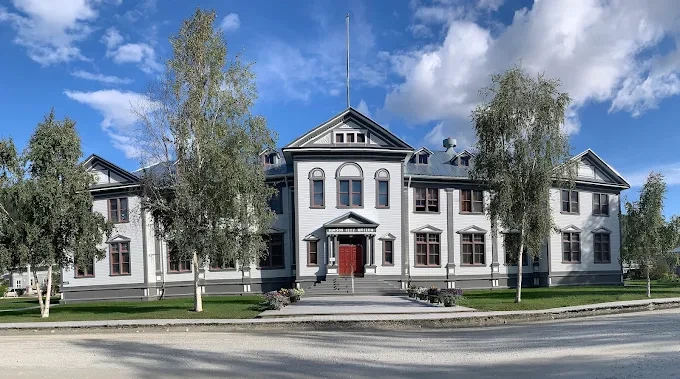
Itsanitaq Museum
Itsanitaq Museum
In Churchill, the Itsanitaq Museum brings together Inuit sculptures and archaeological artifacts spanning over 3,000 years, housed in a single gallery at the heart of northern Manitoba.
The Itsanitaq Museum brings together in a single gallery objects and artworks that trace over 3,000 years of human occupation in the Canadian Arctic. Soapstone sculptures, archaeological tools, a kayak made from seal skin: the collection spans pre-Dorset, Dorset, Thule, and contemporary Inuit cultures, making this small Churchill museum one of the key reference points for understanding the art and craftsmanship of northern Manitoba.
Why visit the Itsanitaq Museum
The museum draws visitors for three concrete reasons. First, the age of its pieces: some artifacts date back more than three millennia and are recognized by several Manitoba heritage plaques. Second, the chronological coherence of the collection, which allows you to follow the evolution of techniques and iconography from pre-Dorset through to contemporary Inuit sculptors. Finally, the human scale of the place: a single, densely packed gallery that takes one to two hours to explore and offers a clear understanding of Arctic cultures before or after a trip focused on local wildlife.
Museum history
The museum was founded in 1944 at the initiative of Catholic missionaries who came to collect and preserve artifacts from the indigenous peoples of northern Canada. For several decades, it was run by Jacques Volant, whose work structured the current collection. The institution was long known as the Eskimo Museum before adopting the name Itsanitaq Museum, an Inuktitut term referring to ancient objects. Today managed by the diocese, it continues to document the links between Arctic archaeology and contemporary creation.
What to see in the collection
The single exhibition gallery concentrates major pieces across two registers: archaeology and Inuit sculpture. Among the elements worth noting:
- Sculptures in soapstone, whale baleen, bone, and caribou antler, spanning pre-Dorset, Dorset, Thule, and contemporary creation.
- Harpoon heads linked to Dorset and Thule cultures, bearing witness to sea ice hunting techniques.
- A kayak (qayaq) covered in seal skin, a rare example of traditional construction.
- Objects of daily Arctic life: snow goggles carved from caribou bone, shoes made from loon skin, narwhal tusks.
- Sections dedicated to northern wildlife—polar bear, walrus, musk ox—that complement the cultural reading of the pieces.
The density of the gallery rewards careful attention: take time to read the labels, which place each object within its archaeological period.
Shop and museum support
The shop offers Inuit crafts, jewelry, maps, and books on northern Canada. Proceeds directly fund the maintenance of the collections and the museum's operations, making it a meaningful point of support beyond a simple souvenir.
Practical information
The museum is located at 242 La Vérendrye Avenue, right in the heart of Churchill. Most accommodations are within walking distance; otherwise, local taxis or transfers offered by some lodges make it easy to reach the entrance. Allow one to two hours to explore the exhibition gallery and shop.
The museum operates on two seasonal schedules: extended opening from June to mid-November, which corresponds to the main tourist season, and reduced hours from mid-November to early June. The museum is closed on Sundays and public holidays. Check the day's hours before you visit, as they may vary from season to season.
When to visit
The museum fits naturally into a Churchill stay timed around local wildlife. The most active periods correspond to summer (July–August, beluga watching in the Churchill River estuary), autumn (October–November, polar bear season along Hudson Bay coast), and winter (February–March, northern lights). The museum becomes a valuable indoor activity on difficult weather days, particularly in autumn and winter. In low season (April–May), shorter hours require a bit of planning.
How to get there
Churchill is not accessible by road. Only two options are available:
- Train from Winnipeg, operated by VIA Rail on the Hudson Bay route. Expect approximately two days of travel, an experience that passes through boreal forest and then tundra.
- Plane from Winnipeg, with regular flights of around two and a half hours, operated by regional carriers serving northern Manitoba.
Once there, you can explore central Churchill on foot; outings beyond the town (wildlife observation, Fort Prince of Wales) require a tour operator or locally rented vehicle.
What to see nearby
The museum is part of a broader visit to Churchill, which combines Arctic heritage, polar bear watching in autumn, and beluga outings in summer. To extend your discovery of Canada through other heritage sites, the Uplands Cultural and Heritage Centre and Historic Hat Creek offer complementary perspectives on Canadian cultures and history.
Planning the rest of your trip
To integrate Churchill and its museum into a broader itinerary, explore our Canada trips: our advisors craft tailor-made journeys combining the Far North, wildlife, and major cities based on your preferred season.
Interested in this visit?
We can include it in your personalised itinerary.