Niagara Falls
Niagara Falls
Horseshoe Falls, Black Canadian heritage, vineyards 15 minutes away: practical guide to Niagara Falls, an Ontario city 1.5 hours from Toronto.
Niagara Falls is a Canadian city in southern Ontario, situated on the west bank of the Niagara River, facing its American twin of the same name. While the falls themselves are the primary draw, the municipality boasts a history and territory that deserve more than a quick photo stop. The city center lies roughly 1.5 hours from Toronto and an hour from Hamilton, making it one of the most accessible day trips from southern Ontario.
Why visit Niagara Falls
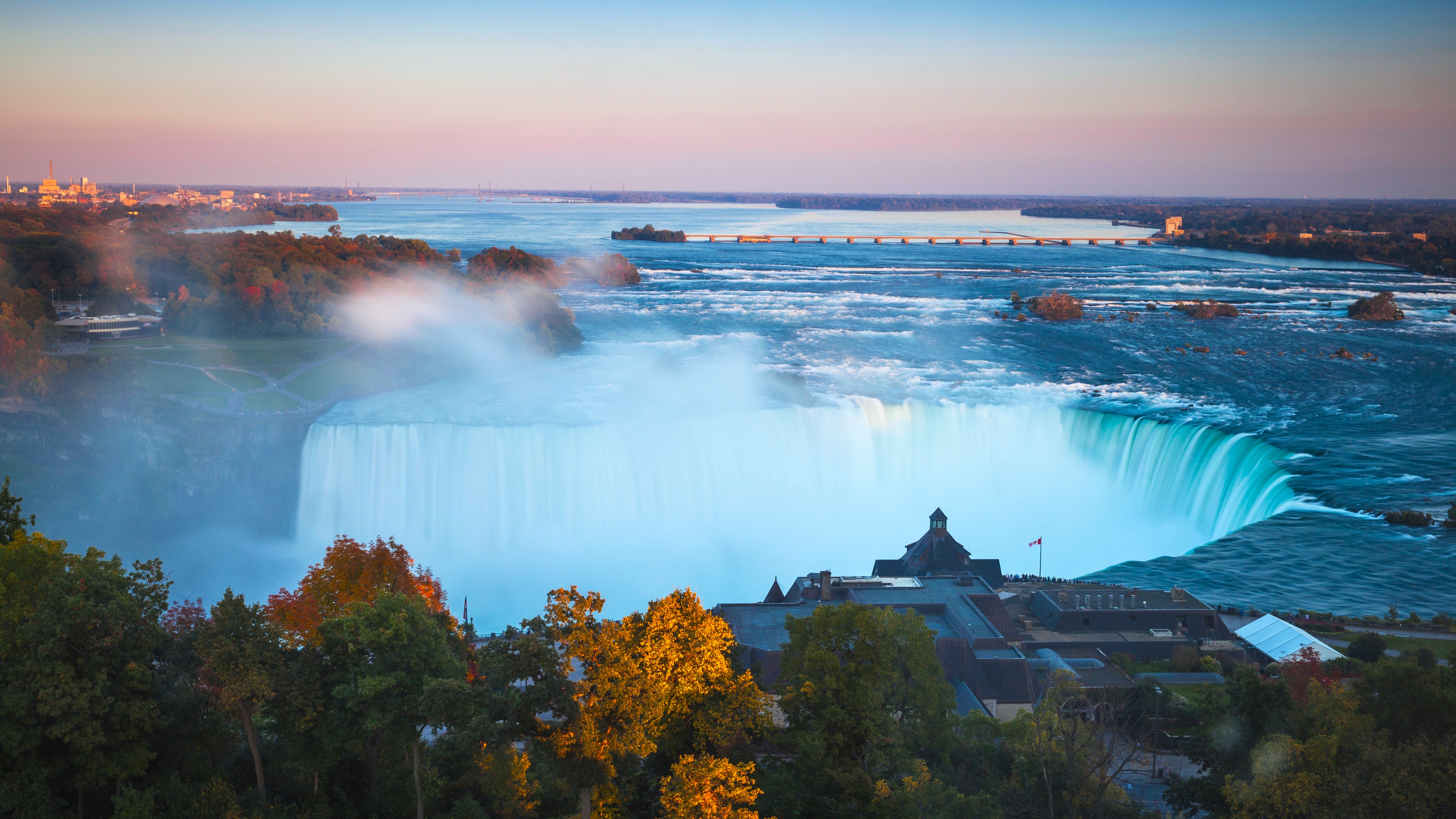
Three main reasons draw visitors. First, the spectacular Horseshoe Falls (Canadian side), whose frontal panorama is visible only from the Ontario shore. Second, access to a renowned wine region just fifteen minutes away, celebrated for its ice wines exported worldwide. Finally, a richer urban history than expected, marked by Indigenous presence, French exploration, and the Underground Railroad.
The city works equally well for a single-day excursion or a two- to three-day stay combining falls, vineyards, and side trips to the CN Tower in Toronto.
A history older than tourist attractions
Before European arrival, the region was inhabited by the Neutral Nation, an Iroquoian-speaking people. In 1678, French missionary Louis Hennepin became the first European to document the falls during an expedition to the area. Colonization intensified after the American Revolution, and the city changed names several times before officially becoming Niagara Falls in 1881. The merger of surrounding communities in 1904 gave it its present form.
Less documented but equally important is its Black Canadian heritage. The city was a destination on the Underground Railroad and hosted a Black community since the late 18th century, following the arrival of Black Loyalists after the American Revolution. In 1886, Burr Plato became one of the first Canadian politicians of African descent elected to public office—a fact few guides mention.
What to see and do
The Horseshoe Falls and surroundings
The Horseshoe Fall can be experienced from multiple perspectives, depending on what you're seeking:
- By boat with Niagara City Cruises, closest to the water
- Zip-lining at over 70 km/h above the gorge
- Through century-old tunnels at Journey Behind the Falls, opening directly onto the falls
- Evening illuminations and seasonal fireworks displays
The Niagara wine region
About fifteen minutes from downtown, vineyards, breweries, and distilleries occupy territory with a favorable microclimate for viticulture. The region can be explored by bike, organized tour, or private shuttle, with a strong specialization in ice wines, recognized internationally.
Viewpoints and nightlife
The Skylon Tower features a rotating observation deck overlooking the falls, its summit reaching approximately 160 meters above ground (236 meters measured from river level), with clear views to Toronto on fair days. The Fallsview Casino Resort rounds out evening options with shows and dining. For a livelier atmosphere, Clifton Hill offers attractions, arcades, and dining venues.
When to visit
Each season offers a distinct experience:
- Spring and autumn: the most balanced periods, with moderate crowds and more accessible accommodation rates. In autumn, maples and vineyard harvests enrich the landscape.
- Summer: peak season, with longer queues and higher hotel prices. Weekdays are less crowded.
- Winter: the falls become ice-covered, and the Winter Festival of Lights, running November through January, illuminates several kilometers along the Niagara Parkway.
How to get there
From Toronto (127 km)
- By car: roughly 1.5 hours via the Queen Elizabeth Way (QEW), with parking at Clifton Hill and the Skylon Tower
- By train: GO Transit (seasonal) and Via Rail connections
- By bus: GO Transit, Megabus, and other operators, 2 to 2.5 hours
From New York
- By train: Amtrak from Penn Station, approximately 9 hours, three daily departures
- By plane: flights to Buffalo International Airport (wider commercial options than Niagara Falls), then about an hour by road
- By bus: long-distance operators like Flixbus, approximately 9 hours
From Buffalo
- By bus: about an hour
- By train: Amtrak, approximately 45 minutes
Getting around
WeGo Bus: the network covers three lines connecting Fallsview, Clifton Hill, and Table Rock Centre at the Horseshoe Falls. 24- or 48-hour passes are available at most hotels and tourist information offices.
By bike: the Niagara Parkway offers a 56-kilometer cycling route along the river. Several rental shops operate in town.
On foot: major attractions are clustered within a compact, flat area, allowing you to reach them without motorized transport.
By car: useful for reaching the wine region. During peak season, traffic becomes dense around the falls and parking is expensive.
Nearby
- Niagara-on-the-Lake: historic town about twenty minutes north, the heart of the wine region and home to a renowned summer theater festival
- Toronto: 1.5 hours by road, accessible for a day trip or as a base for your stay; panoramic views from the CN Tower
- Quebec: to extend your journey eastward, Château Frontenac and Île aux Coudres rank among the notable heritage stops
Frequently asked questions
Frequently asked questions
Planning your journey
Niagara Falls integrates naturally into a broader Ontario itinerary, or as an entry point for a trip combining Ontario and Quebec. To build a tailor-made route incorporating the falls, vineyards, and Canada's major cities, explore our Canada tours.
Interested in this visit?
We can include it in your personalised itinerary.