Tofino
Tofino
Tofino, western tip of Vancouver Island: Long Beach, surfing, Pacific Rim temperate rainforest and Nuu-chah-nulth culture, between the Pacific and Clayoquot Sound.
Tofino occupies the tip of the Esowista Peninsula at the western edge of Vancouver Island, facing the Pacific. The village concentrates sandy beaches, temperate rainforest, and Nuu-chah-nulth Indigenous culture within a few kilometres' radius. This guide brings together the essentials for planning a stop or stay on this exposed British Columbia coast.
Why visit Tofino
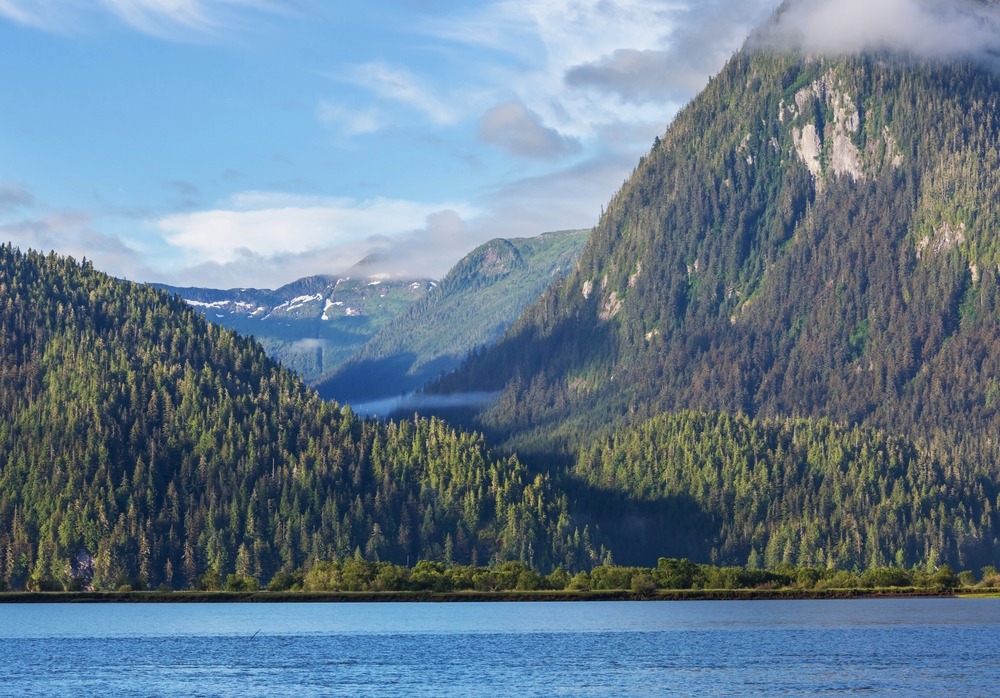
Tofino draws its appeal from the convergence of three environments: open ocean, old-growth forest, and the Clayoquot Sound estuary. The community has become Canada's surfing capital, yet it offers plenty beyond the board: whale watching from March through October, boarded walkways threading through Pacific Rim National Park, kayaking in protected bays, Indigenous art galleries. In winter, Pacific storms attract visitors keen to watch the sea work from the picture windows of lodges. The territory has been inhabited by the Nuu-chah-nulth people for over 5,000 years, which deeply shapes signage, place names, and cultural offerings.
History of Tofino
Before European arrival, the Nuu-chah-nulth people lived along Clayoquot Bay shores for over 5,000 years, drawing most of their livelihood from fishing and coastal hunting. First European explorations date to 1774. In 1792, the bay is renamed "Tofiño Inlet" in honour of Spanish cartographer Vicente Tofiño.
The first permanent settlement was established around 1854, and the village developed until its official incorporation as a municipality in 1932. In 1942, Ottawa orders the forced removal of Canadian residents of Japanese descent from the west coast: homes and boats are confiscated, and Tofino loses nearly a third of its population. The ban on coastal residency is not lifted until 1949.
A road opening to Port Alberni in 1959 opens up the village and successively supports the forestry industry, fishing, then tourism from the 1990s onward. In 2010, Tofino is named North America's best surfing town. The district now welcomes more than a million visitors annually.
What to see and do in Tofino
Long Beach
Long Beach unfolds over 16 kilometres of sand edged by old-growth forest. At low tide, rocky outcrops emerge and tidal pools shelter sea stars and anemones. Walkers and surfers share the space year-round.
Rainforest Trail
Within Pacific Rim National Park, two boarded loops wind between giant red cedars, ferns, and moss carpets. The trail is accessible and sits about 20 minutes' drive from the village. A fine introduction to temperate rainforest.
Whale watching
From March through October, the open water hosts grey whales, orcas, fin whales, and porpoises. Several local operators run guided outings. Spring, during grey whale migration, remains the most predictable period.
Surfing at Chesterman Beach
Chesterman Beach is the main learning spot. Several schools coach beginners; water is cold year-round and a full wetsuit is essential.
Wolf in the Fog
This acclaimed downtown restaurant works the coast's produce: halibut, snow crab, smoked fish. Booking well ahead is wise, especially high season.
Roy Henry Vickers Gallery
Indigenous artist Roy Henry Vickers's gallery is designed as a traditional nuu-chah-nulth house. Engravings, silkscreens, and sculptures dialogue with the wooden architecture.
Kayaking in Clayoquot Sound
Clayoquot Bay lends itself to sea kayaking among forested islets and coves. Guided outings with naturalists allow viewing bald eagles and seals at a good distance.
Winter storms
From November through February, Pacific weather systems strike the coast. The Wickaninnish Inn and Long Beach Lodge are designed to observe these storms from indoors, facing the ocean.
When to go
Tofino can be visited year-round. The climate is temperate and humid, shaped by ocean and rainforest.
- Spring (March to May): warming temperatures, still-quiet beaches, start of grey whale watching season.
- Summer (June to August): peak season, long days, stable conditions. Accommodation and activities warrant booking well ahead.
- Autumn (September to October): declining crowds, still-favourable conditions, interesting light.
- Winter (November to February): storm season, heavy precipitation, strong winds. Prime period for storm watching.
How to get there
Regardless of origin, the journey requires at least one connection.
- By car and ferry: from the mainland, cross the Salish Sea by ferry to Nanaimo, Comox, or Victoria, then drive. Allow about 3 hours from Nanaimo and nearly 5 hours from Victoria, on Route 4 (Pacific Rim Highway, 317 km from Victoria). Winter tires or chains are mandatory from October 1 to March 31.
- By air: domestic flights from Vancouver (YVR) to Tofino-Long Beach Airport (YAZ) with Pacific Coastal Airlines. Seasonal links from Nanaimo and Victoria.
- By seaplane: Harbour Air connects Vancouver to Tofino in under 45 minutes, seasonally.
- By shuttle: Tofino Express Bus and private services from several Vancouver Island terminals.
Car rental upon arrival is recommended and should be booked ahead.
Practical information on site
- On foot and by bike: downtown is easily navigated on foot. The ʔapsčiik t̓ašii cycling path links Tofino to Ucluelet along the beaches.
- Free shuttle: in summer, the Tofino Free Shuttle connects downtown to Long Beach.
- Regional bus: daily service to Tofino, Ucluelet, Esowista, Ty-Histanis, and hitaçú.
- Accessibility: two beach wheelchairs are available at the visitor information centre, by reservation.
- Gear: waterproof clothing and warm layers are useful year-round, even in summer.
Nearby
Tofino naturally extends to other stops on Vancouver Island and in British Columbia.
- Ucluelet: at the other end of Pacific Rim National Park, reachable via the ʔapsčiik t̓ašii cycling path. More local feel and the Wild Pacific Trail coastal walk.
- Pacific Rim National Park Reserve: between Tofino and Ucluelet, encompasses Long Beach, several trails, and the West Coast Trail further south.
- Hot Springs Cove: hot springs accessible only by boat or seaplane from Tofino, on the edge of Maquinna Marine Provincial Park.
- Further south on the island, Cowichan Bay and Parksville round out a coastal itinerary.
Frequently asked questions
Frequently asked questions
Surfing happens year-round. Autumn and winter bring the most powerful swells for experienced surfers, while spring and summer suit beginners better, with more consistent conditions at Chesterman Beach. A full wetsuit remains essential any time of year.
A car eases access to various beaches and Pacific Rim National Park trails, which stretch several kilometres. In summer, however, the free shuttle and the cycling path to Ucluelet allow getting by without a vehicle for a stay centred on the village and nearby beaches.
The season runs March through October. March and April mark grey whale migration, particularly numerous offshore. Summer allows viewing orcas, fin whales, and porpoises on guided boat or zodiac outings.
Three to four nights allow combining Long Beach, a rainforest trail, a whale-watching outing, and a stop in Ucluelet. A week leaves room for an excursion to Hot Springs Cove or multiple surf sessions.
Planning your trip
Tofino fits into a broader itinerary across Vancouver Island or British Columbia. To build a coherent stay around this coast, see our Canada travel experiences.
Interested in this visit?
We can include it in your personalised itinerary.