Vancouver Island
Vancouver Island
Vancouver Island condenses everything the west coast of Canada has to offer into 460 kilometres: wild fauna, surfing, ancient forests and First Nations culture.
Vancouver Island is the largest island on the west coast of North America. It is part of British Columbia and stretches nearly 460 kilometres from north to south, facing the Pacific Ocean. Within a few hours' drive, the landscapes change dramatically: port cities, dense forests, beaches opening onto the open sea. It is this diversity, concentrated on a single island, that catches most visitors by surprise.
History of Vancouver Island
Vancouver Island has been inhabited for roughly 8,000 years. Three major Indigenous peoples established themselves there long before the arrival of Europeans: the Nuu-chah-nulth on the west coast, the Coast Salish in the south and on the east coast, and the Kwakwakaʼwakw in the centre and north. Their heritage remains visible today in place names, cultural centres and traditions that endure across the island.
The history of Vancouver Island shifted in 1774, when Spain sent its first expeditions from the Pacific. Great Britain became interested in turn in 1778, when Captain James Cook visited Nootka Sound and claimed it in the name of the Crown. A tussle between the two powers ensued, resolved peacefully by the Nootka Convention in 1792, the year British Captain George Vancouver met Spanish explorer Bodega y Quadra, giving the island the name we know it by today.
British colonisation organised itself through the 19th century with the founding of Fort Victoria in 1843, the establishment of an official colony in 1849, then the attachment to British Columbia in 1866. Victoria became the provincial capital, a status it retains to this day.
What to See on Vancouver Island?
From the capital Victoria to the wild north of the island, each region has its own character and attractions.
The South: Victoria
Capital of British Columbia, Victoria surprises with its unapologetic British character. The Inner Harbour, the Royal BC Museum and Chinatown, Canada's oldest, rank among the city's must-see stops. Some 20 kilometres from the centre, the Butchart Gardens merit the detour, particularly for their rose garden and Japanese garden.
The Centre: Cathedral Grove and the Cowichan Valley
Two hours' drive from Victoria, Cathedral Grove is home to some of Canada's oldest trees, including a Douglas fir over 800 years old. The Cowichan Valley is distinguished by its farms, vineyards and coastal villages such as Cowichan Bay.
The West Coast: Tofino and Ucluelet
Tofino is the rallying point of the west coast, with its vast sandy beaches facing the Pacific and its decidedly laid-back atmosphere. About 40 kilometres to the south, Ucluelet is a quieter base for exploring the Pacific Rim National Park and its coastal trails.
The North: Telegraph Cove and Alert Bay
Telegraph Cove is a small isolated village on the east coast, six hours' drive from Victoria. A few kilometres by ferry away, Alert Bay and its U'mista cultural centre offer a direct introduction to Kwakwaka'wakw First Nations culture.
What to Do on Vancouver Island?
Vancouver Island is above all an outdoor destination, where nature structures days as much as itineraries.
Observe Wildlife
Boat tours are the best way to approach the island's marine fauna. From Tofino, excursions allow you to observe black bears on the shore throughout the summer. From Telegraph Cove, the waters of Johnstone Strait welcome hundreds of orcas and humpback whales. For grizzly bears, you need to head towards Campbell River, from late August to October.
Surfing in Tofino
Nicknamed Canada's surfing capital, Tofino attracts surfers from around the world to its wind-swept beaches. Long Beach and Cox Bay are the most frequented spots. Lessons are available for beginners.
Sea Kayaking
Claoquot Sound offers calm waters ideal for kayaking, with spectacular scenery and frequent wildlife encounters. Overnight excursions allow you to explore the region's islands and inlets.
Hiking
The island offers trails for all levels. The West Coast Trail, 75 kilometres between Bamfield and Port Renfrew, is reserved for experienced hikers. For more accessible routes, the Wild Pacific Trail in Ucluelet and Mount Albert Edward in Strathcona Provincial Park are two good options.
Taking a Road Trip
The classic itinerary connects Victoria to Tofino via the Cowichan Valley and Cathedral Grove. The road is narrow and winding, with many possible stops along the way.
When to Go?
Vancouver Island enjoys a mild, damp climate year-round. Rainfall is abundant in winter and significantly rarer in summer. The ideal period to visit extends from May to mid-October.
July and August are the most popular months, particularly in Tofino and Telegraph Cove. Advance booking is strongly recommended. June and September offer beautiful days with more reasonable visitor numbers and a more relaxed atmosphere.
A raincoat remains useful whatever the season.
Vancouver Island is accessible by ferry or plane from the mainland.
By Ferry
BC Ferries operates regular crossings between Vancouver and Victoria in 90 minutes, and between Vancouver and Nanaimo in two hours. The company accepts vehicles, making it the most practical option for those wishing to explore the island by car.
By Plane
Daily flights serve the island's three main airports, Victoria, Nanaimo and Comox, from Vancouver, Calgary and Edmonton.
The car remains the most common way to explore the island independently, especially as the road network is limited to two main routes. For small groups, rental often proves more economical than the bus.
By Bus
Island Link Bus operates regular services between the island's main towns, notably Victoria, Nanaimo, Campbell River and Tofino. A practical option for travellers without a vehicle.
By Boat
Certain sites, notably the islands off the coast, are only accessible by sea. Excursions and water taxis are available throughout the island, including in the most remote areas.
By Seaplane
A pricier option, but one that offers a unique perspective on the island's landscapes and its jagged coastlines.
Attractions in Vancouver Island
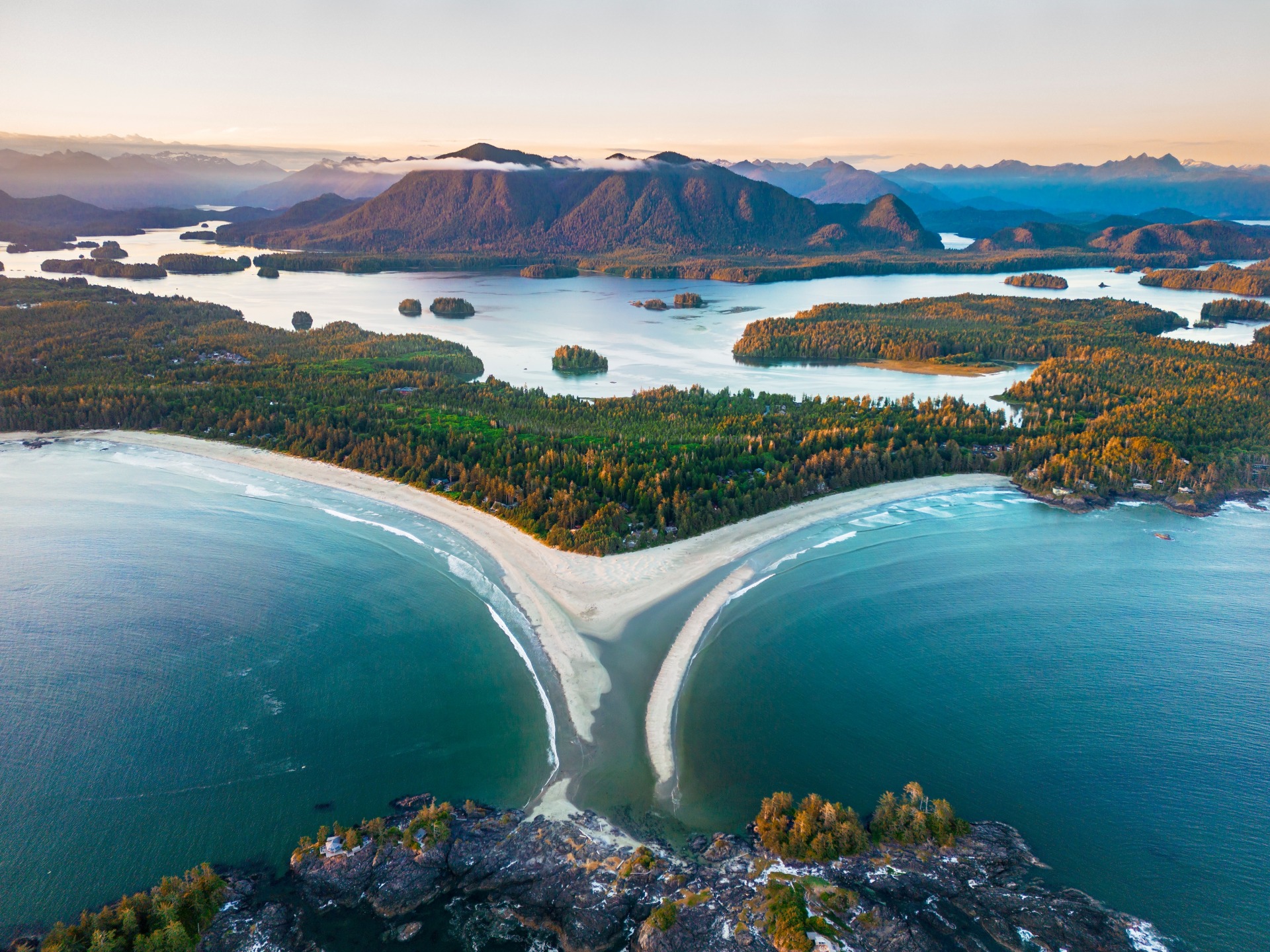
Tofino
Tofino, pointe ouest de l'île de Vancouver : Long Beach, surf, forêt pluviale du Pacific Rim et culture Nuu-chah-nulth, entre Pacifique et Clayoquot Sound.
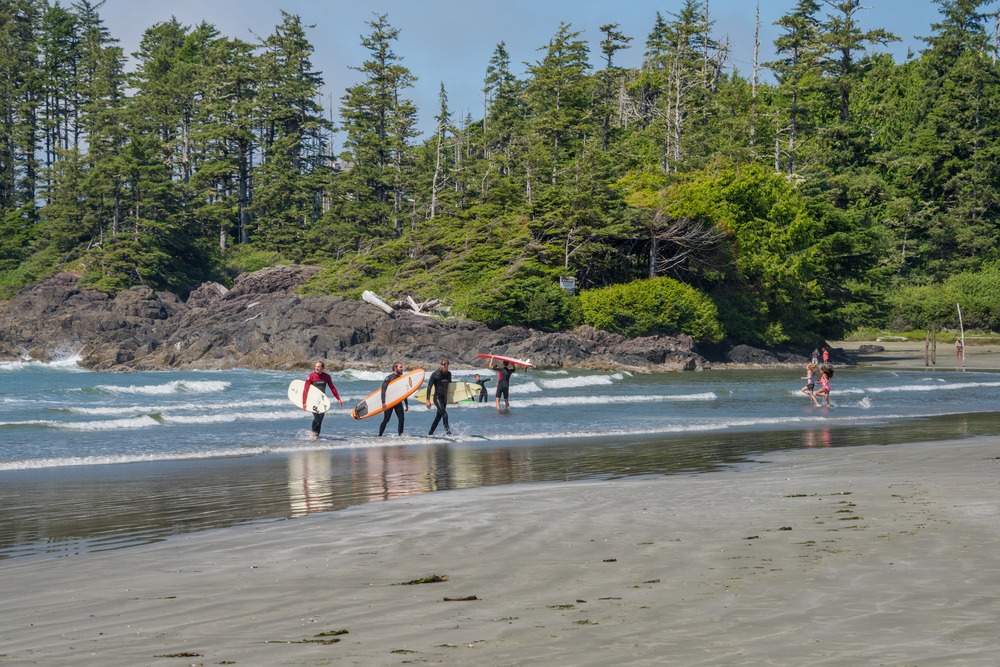
Pacific Rim National Park Reserve
Réserve de parc national de 511 km² sur la côte ouest de l'île de Vancouver : forêt pluviale, plages de Long Beach, archipel Broken Group et West Coast Trail.
Want to discover this destination?
Our local advisors design your tailor-made trip.