Victoria
Victoria
At the southern tip of Vancouver Island, Victoria blends British heritage, generous nature and orca watching. A complete guide to visiting British Columbia's capital.
At the southern tip of Vancouver Island, Victoria asserts itself with quiet confidence. Capital of British Columbia, it carries within it the traces of a rich history and generous nature that give it a character entirely its own. It is no accident that painter Emily Carr chose to immortalize it on her canvases.
A Bit of History
Long before the arrival of Europeans, the region had been inhabited for over 4,000 years by the Salish peoples of the coast, including the Songhees. In 1843, James Douglas, an agent of the Hudson's Bay Company, chose the small natural port of Camosack to erect Fort Victoria, named in honour of the British queen. Between 1850 and 1854, having become governor, he concluded eleven treaties with the region's Indigenous groups—agreements that remain contested to this day.
The Fraser River gold rush of 1858 transformed the city into the principal supply hub for prospectors, and it was officially incorporated as a city in 1862. Capital of the Vancouver Island colony from 1849, it retained this status through various political reconfigurations until the province's creation in 1871. The construction of the Legislative Assembly, completed in 1898, marked the definitive consecration of its role as provincial capital.
Victoria Today
At the turn of the 20th century, Vancouver's rise prompted Victoria to reposition itself around government, tourism and military presence, with the Canadian Forces Base Esquimalt remaining active. This model still holds today, supplemented by a growing high-tech sector. The city has meanwhile managed to preserve its heritage: the restoration of Old Victoria and Chinatown, Canada's oldest, undertaken in the 1980s, testifies to this attachment to its past. Its population, older than the Canadian average, lends it a composed atmosphere all its own.
What to See in Victoria?
Victoria concentrates within a compact perimeter an architectural and cultural heritage that alone justifies the journey.
The Inner Harbour, Victoria's Historic Heart
Its lively promenade, colourful water taxis and waterfront terraces set the tone for a city that knows how to make the most of its setting. This is where it all begins, and often where you return at day's end.
Parliament and the Royal BC Museum in Downtown
The buildings of the British Columbia Parliament dominate the harbour with architecture that does not go unnoticed. Guided tours allow exploration of the interior and a deeper understanding of the province's political history. Nearby, the Royal BC Museum houses collections on natural history, modern history and First Nations history—a visit that easily occupies a good part of the day.
Chinatown and Fan Tan Alley
Canada's oldest Chinatown invites you to wander through its narrow lanes. Narrow, discreet, easily missed if you don't know it exists, it is often where the visit takes on its full interest.
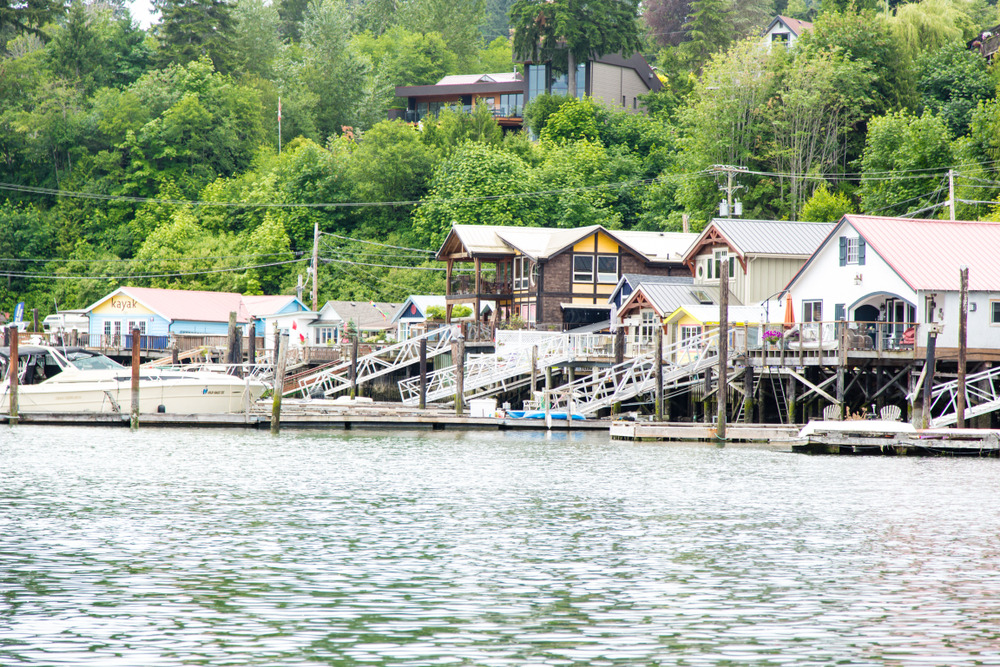
Fisherman's Wharf and Its Floating Homes
A few minutes' walk from downtown, Fisherman's Wharf offers a quite different atmosphere. Its colourful floating homes and seafood restaurants make it a pleasant stop, away from the bustle of the inner harbour.
What to Do in Victoria?
Between the sea and the parks, Victoria offers a palette of activities to be experienced as much as observed.
Watching Orcas in the Juan de Fuca Strait Waters
Three resident families frequent these waters in summer. Seeing them surface mere metres from the boat is a reality that photographs struggle to capture. Several operators offer excursions departing from the harbour.
Sea Kayaking and Water Activities Around Victoria
Sea kayaking is another way to explore the coastline at a more personal pace. Several companies offer guided outings departing from the harbour, suited to all levels.
Hiking and Cycling in Victoria's Parks
Beacon Hill Park, in the heart of the city, offers trails, gardens and lakes for a green respite without leaving downtown. For cycling, Galloping Goose Trail and the Lochside Trail connect different parts of the city and its surroundings on accessible routes.
Afternoon Tea, a Living British Tradition
Scones, jam and tea—the tradition thrives in Victoria, and you quickly understand why when seated at table. This pause inherited from British presence is savoured without haste.
What to Discover Around Victoria?
Just a few kilometres from downtown, Victoria gives way to wilder and less-frequented nature.
Butchart Gardens, a National Historic Site Not to Miss
Some thirty kilometres north of Victoria, these gardens recognised as a Canadian national historic site offer remarkable floral landscapes that vary with the seasons.
Goldstream Provincial Park and the Salmon Migration
About twenty kilometres from the city, this park impresses with its towering trees and waterfalls. In autumn, the salmon migration attracts numerous bald eagles, a striking natural spectacle.
Sooke Potholes Provincial Park and Its Rock Formations
Located west of Victoria, this park is renowned for its unique rock formations and water holes carved into the Sooke River. Trails run alongside the river, allowing you to fully enjoy the site.
The Gulf Islands, a Pristine Escape Accessible by Ferry
Accessible by ferry, this collection of islands offers preserved coastal landscapes and hiking possibilities in an uncrowded setting.
When to Go?
The most favourable period extends from May to September, with a peak in July and August. Summers are mild, with temperatures around 21°C, and sunny days are ideal for outdoor activities. Outside this window, rainfall is more frequent and temperatures cooler, January being the wettest month. Off-season travel remains an interesting option: crowds diminish, the atmosphere becomes more tranquil and prices are generally more advantageous.
Reaching Victoria by Air via YYJ International Airport
Located some twenty kilometres north of downtown, Victoria International Airport offers regular connections to major Canadian and American destinations.
Connecting Vancouver to Victoria by Seaplane
The seaplane link between Vancouver harbour and Victoria's inner harbour takes about twenty minutes. More expensive than other transport options, it offers in return views of the coastline and islands that are difficult to match.
Crossing to Victoria by Ferry from Vancouver or Seattle
BC Ferries operates the link between Tsawwassen and the Swartz Bay terminal in approximately 95 minutes. In fine weather, the Gulf Islands come into view along the entire crossing, making it a journey in its own right. A separate service also connects Port Angeles in Washington State to Victoria.
Reaching Victoria by Coach via BC Ferries
Coach services offer a direct connection between Vancouver and Victoria's downtown, with ferry crossing included, with drop-off at Capital City Station, behind the Fairmont Empress hotel.
Exploring Victoria's Downtown on Foot
With its compact downtown and well-maintained streets, Victoria is naturally explored on foot. It is often while walking that you discover the details you might otherwise have missed.
Getting Around Victoria by Bike
The Galloping Goose Trail and Lochside Trail trace accessible routes through the city and its surroundings. An efficient and pleasant way to cover the region without resorting to the car.
Renting a Car to Explore Victoria's Surroundings
To reach the provincial parks or Butchart Gardens, the car remains the most practical option. Traffic rarely poses a problem, though parking spaces become scarce downtown during busy hours.
Getting Around Victoria by Bus
Victoria Transit System's network serves the city's main areas, from residential neighbourhoods to tourist sites, including ferry terminals. A convenient solution for those wishing to get around without a car.
Want to discover this destination?
Our local advisors design your tailor-made trip.