Cowichan Bay
Cowichan Bay
A harbour village on Vancouver Island, Cowichan Bay blends maritime heritage, a protected estuary and an artisan community just 1 hour from Victoria.
In the south-east of Vancouver Island, British Columbia, Cowichan Bay is a harbour village of around 3,000 inhabitants nestled on the shores of a deep estuary. The town stretches along a single street lined with stilt houses, wooden wharves and artisan workshops. The Cowichan Valley, which extends inland from the port, is renowned for its mild climate, vineyards and farm production.
Why visit Cowichan Bay
Cowichan Bay is one of the most accessible stops in the Cowichan Valley, midway between Victoria and Nanaimo. Within a few hundred metres, the village concentrates an impressive maritime heritage, a community of artisans who have settled here since the early 2000s (bakery, cheese-maker, pottery studio) and an estuary designated for its ecological significance. The site suits a half-day stopover or a longer stay as a base for exploring the valley by bike, hiking Mount Tzouhalem or touring nearby wineries.
History of Cowichan Bay
For millennia, Cowichan Bay sheltered First Nations peoples, who practised salmon fishing and shellfish harvesting. The estuary was both a subsistence area and an important cultural space for Coast Salish peoples.
A rare anthropomorphic soapstone bowl, dated to the Marpole culture (400 BCE – 400 CE) and discovered on site, bears witness to this ancient occupation. The artefact is now preserved at the British Museum in London.
In the 19th century, the bay became a gateway to the valley for European settlers. Connected to Victoria by steamboat service, it flourished through salmon fishing and timber harvesting. At the turn of the 20th century, the village established itself as a premier sport-fishing destination, attracting travellers from across the British Empire; annual regattas enhanced its maritime reputation.
After several decades of decline, Cowichan Bay experienced a revival beginning in the early 2000s with the opening of an artisanal bakery, followed by a cheese-maker, pottery studio and independent shops. In 2009, the village was recognised as North America's first 'Cittaslow', an international label promoting slow living and local economies.
What to see in Cowichan Bay
The waterfront and stilt houses
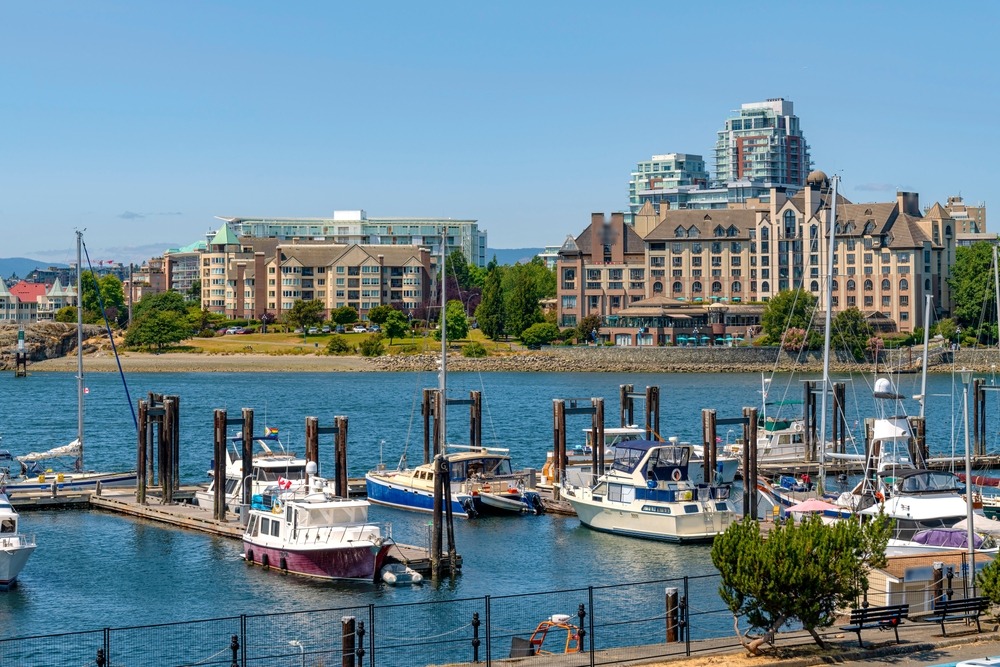
The waterfront is organised around wooden wharves and homes built above the water, remnants of the fishing-port era. A few hundred metres are enough to explore the village heart, dotted with cafés, workshops and shops.
Cowichan Bay Maritime Centre
Run by the Wooden Boat Society, this centre occupies a series of pavilions built on stilts. You'll see restored wooden sailing vessels, scale models and exhibitions dedicated to the bay's naval history. A suggested donation is typically requested at entry.
Cowichan Estuary Nature Centre
At the mouth of the Cowichan River, this small interpretive centre provides access to observation trails. The estuary is home to herons, bald eagles and harbour seals, particularly visible at sunrise.
Artisan workshops
Potters, sculptors, bakers and cheese-makers occupy most of the main street. Several workshops operate on a direct-sales basis and some offer demonstrations in season.
Practical information
- Location: south-east Vancouver Island, approximately 60 km north of Victoria.
- Visit duration: 2 to 4 hours for the village, a full day if including the estuary and a neighbouring winery.
- Admission: free access to the village. The Maritime Centre and Nature Centre operate on a donation or modest fee basis.
- Parking: free public car parks at both ends of the village.
- Accessibility: the main street is flat; some wooden docks can be slippery in wet weather.
When to visit
The Cowichan Valley's climate is among the mildest in Canada, with temperate winters and rarely scorching summers.
- May to October: the sunniest season, ideal for outdoor activities and winery tastings.
- July and August: peak season, farmers' markets and nautical festivals; village busier at weekends.
- March–May and September–November: quiet shoulder seasons, good conditions for wildlife observation in the estuary.
- December to February: wetter period, peaceful stays, low light ideal for photography.
How to get there
- By car: Cowichan Bay is reached from the Trans-Canada Highway (Route 1), with a clearly marked exit. Allow approximately 45 minutes to 1 hour from Victoria and 1 hour from Nanaimo depending on traffic.
- From Vancouver: cross by BC Ferries from Horseshoe Bay or Tsawwassen to Nanaimo (Departure Bay or Duke Point), then drive south.
- By air: airports at Victoria (YYJ) and Nanaimo (YCD), both served from major Canadian cities.
- By local bus: the Cowichan Valley Regional Transit System (BC Transit) connects Cowichan Bay to Duncan, the valley's main hub. Check current route numbers before departure.
- By intercity coach: services such as NCX (Route 70) link the valley to Nanaimo; schedules and operators change, so confirm with active providers.
Around the area
- Duncan: 10 km to the north, known for its outdoor totem pole trail and weekly farmers' market.
- Mount Tzouhalem: a local summit accessible by hiking, offering views over the valley and estuary; trails shared with mountain bikers.
- Cowichan Valley wineries: around twenty wine and cider estates within a 20 km radius, some open for tasting by appointment.
- Salt Spring Island: accessible by ferry from Crofton, known for its Saturday market and arts scene.
Frequently asked questions
Frequently asked questions
Half a day is enough to walk through the village, visit the Maritime Centre and have lunch on the waterfront. Allow a full day to add the estuary, a hike up Mount Tzouhalem or a winery visit.
Yes, but it requires some flexibility in planning. Regional buses connect Duncan and Nanaimo. On-site, the village is walkable; cycling is convenient for reaching nearby wineries via the Cowichan Valley Trail.
Most orca and whale-watching excursions depart from Victoria, Sidney or Nanaimo. From Cowichan Bay's port, you'll mainly observe seals, herons and bald eagles in the estuary.
Yes. The flat waterfront, Maritime Centre and Nature Centre are child-friendly. Farmers' markets and artisan studios round out a family visit without particular logistical challenges.
Yes, especially paired with Duncan and one or two valley wineries. The proximity to the Trans-Canada Highway makes a same-day round trip easy.
Plan your trip
Cowichan Bay fits naturally into an itinerary on Vancouver Island, between Victoria, the Cowichan Valley and Nanaimo. To build a bespoke journey including the west coast, the Rockies or further east, explore our Canada trips. You can also extend your discovery with other Canadian natural sites such as Banff National Park or Bic National Park.
Interested in this visit?
We can include it in your personalised itinerary.