Kluane National Park and Reserve
Kluane National Park and Reserve
In southwestern Yukon, Kluane National Park and Reserve protect 22,000 km² of ice fields, peaks over 5,000 m and subarctic wildlife, designated a UNESCO World Heritage Site since 1979.
In southwestern Yukon, Kluane National Park and Reserve span more than 22,000 km² of territory where some of the world's largest non-polar ice fields extend across the landscape. Mount Logan, Canada's highest peak (5,959 m), rises at the heart of a protected area inscribed on the UNESCO World Heritage list since 1979.
Why visit Kluane
Kluane belongs to a transboundary complex ranking among the world's largest protected areas. The park is bordered to the west by Wrangell-St. Elias National Park in Alaska, to the south by Tatshenshini-Alsek Provincial Park, and to the north by Asi Keyi Territorial Park. Its uniqueness stems from a rare combination of peaks exceeding 5,000 metres, continental-scale glaciers, and perfectly preserved subarctic wildlife.
The park comprises two entities under joint administration: the national park to the southeast and the national park reserve covering the rest of the territory. Its governance is ensured jointly by Parks Canada and the Champagne and Aishihik, Kluane, and White River First Nations, a shared management model that protects ecosystems while valuing Indigenous knowledge.
History and governance
Kluane did not achieve its current status through a single decision. Established as a game reserve in 1942, the region became a national park and reserve in 1972, on lands used for millennia by the Champagne and Aishihik, Kluane, and White River First Nations, who practised hunting, fishing, and trapping there. The construction of the Alaska Highway in the 1940s caused displacement of Indigenous populations, leaving lasting marks on collective memory.
In 1979, Kluane was inscribed on the UNESCO World Heritage list for its glacial landscapes. Territorial agreements signed in the 1990s and 2000s have since reaffirmed the harvesting, gathering, and hunting rights of local First Nations, solidifying their cultural and spiritual connection to this territory.
What to see and do
Flora and fauna
Vegetation evolves with altitude. Mountain forests of spruce, aspen, and poplar give way to willows, dwarf birches, and alders in the subalpine zone, then to alpine tundra and its Arctic flowers. This mosaic supports remarkable wildlife:
- Dall sheep and mountain goats, often visible from the road
- Moose, wolves, black bears, and grizzlies
- Wide variety of nesting and migratory birds
On the nunataks—rocky peaks emerging from the ice—pikas and arthropods thrive in an extreme environment, testifying to the adaptability of life itself.
Hiking and outdoor activities
Hiking is the park's flagship activity. Trails range from family-friendly walks to multi-day alpine itineraries, with panoramas opening onto glacial valleys and flower-carpeted meadows. The Kathleen Lake area serves as a natural starting point. Depending on your level and available time, you can:
- Stroll around Kathleen Lake, with picnic area and nearby camping
- Follow multi-day alpine routes leading to glacial valleys
- Traverse old mining roads by mountain bike
- Descend the park's wild rivers by whitewater kayak
Scenic flights and cultural encounters
- Panoramic flightseeing allows you to grasp the scale of the ice fields and peaks; some flights include a landing deep within the glacial landscape, otherwise inaccessible.
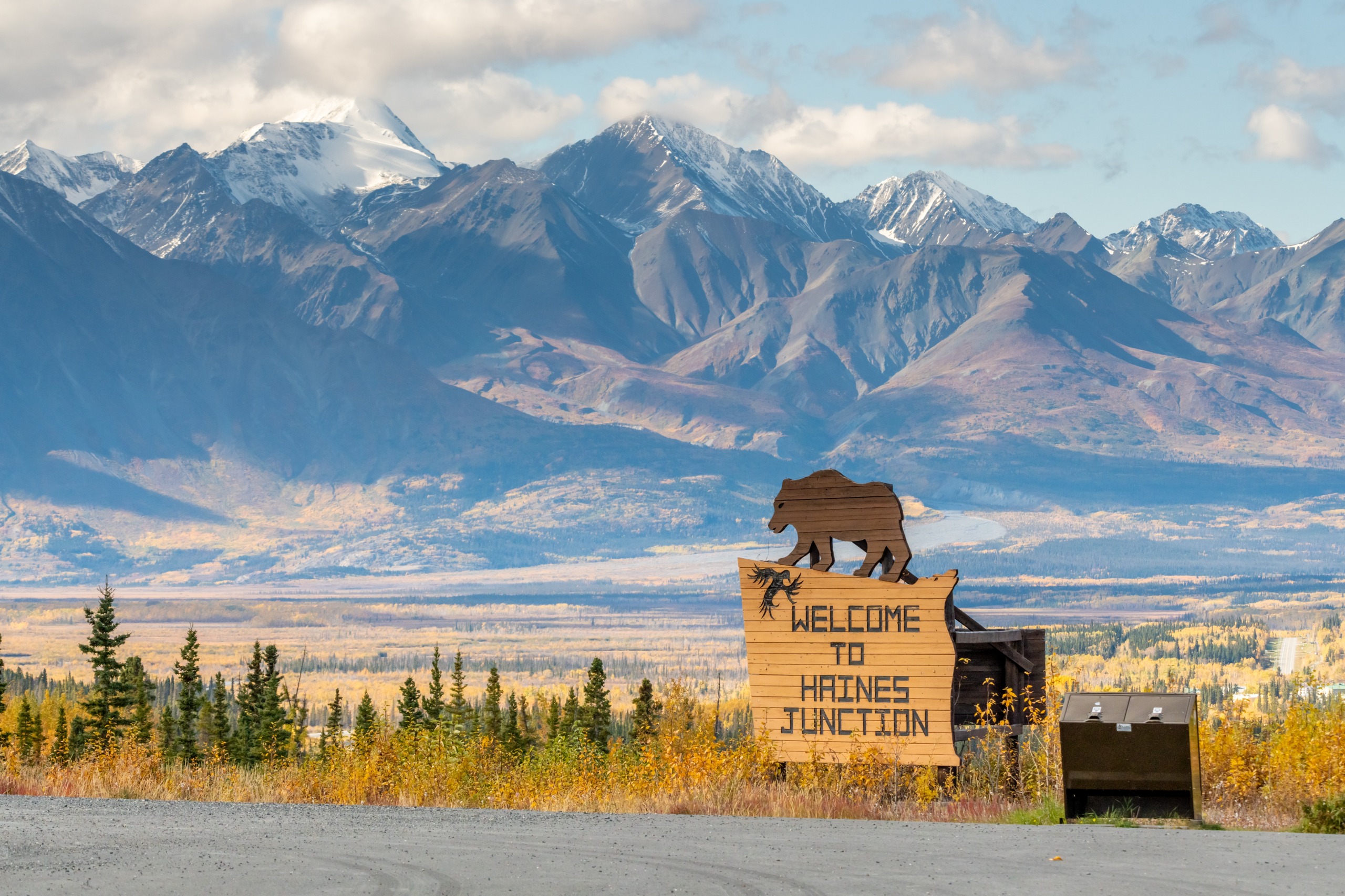
- The Haines Junction visitor centre features a 3D topographic model and exhibitions on Kluane's geology, history, and cultures.
- Guided hikes led by First Nations members offer a cultural reading of the territory beyond its landscapes alone.
When to visit
- Summer (mid-June to early September): ideal season for hiking and wildlife viewing, with Yukon's characteristic long daylight hours.
- Autumn (September to October): early snows arrive and northern lights become visible again from mid-September.
- Winter and early spring (November to April): prime season for aurora viewing, though park services are reduced—advance planning is essential.
How to get there
The park is accessible by car from Yukon and Alaska via two main routes:
- From Whitehorse: approximately 180 km via the Alaska Highway, about 2 hours' drive
- From Haines (Alaska): access via the Haines Highway
Main entry points are located at Kathleen Lake and Tachäl Dhäl.
Practical information
Two visitor centres serve travellers:
- Haines Junction: at the park entrance, it provides information on services, itineraries, and current conditions, and houses the 3D topographic model.
- Tachäl Dhäl: located 74 km north of Haines Junction, particularly useful for planning wildlife observation hikes.
Advance registration is required for backcountry hiking. Plan a day for Kathleen Lake trails, several days for alpine routes. Conditions can change rapidly: cold and rain gear is essential even in summer.
Nearby
The ideal logistical base remains the town of Haines Junction, at the park's northern entrance. Visitors often extend the experience to other Canadian national parks, such as Banff National Park in the Rockies, or Gros-Morne National Park in Newfoundland, also a UNESCO site. For those seeking similar grand park experiences in the east, Forillon National Park in the Gaspé Peninsula offers another perspective on Canadian landscapes.
Frequently asked questions
Frequently asked questions
Registration with Parks Canada is mandatory for all backcountry hiking, accompanied by daily fees. Short walks around Kathleen Lake do not require registration, but stopping at the Haines Junction visitor centre is recommended to learn about current conditions.
The park is home to black bears and grizzlies. Carrying bear spray, using airtight food containers, and hiking in groups with noise alerts are strongly recommended. The visitor centre provides up-to-date guidance before each outing.
Yes, but with reduced services. Visitor centres close in autumn and secondary roads may become impassable. Winter does, however, attract visitors for northern lights and Nordic activities, provided thorough preparation is undertaken.
Mount Logan sits at the heart of the ice fields and is not visible from main roads. Scenic flights departing from Haines Junction or Burwash Landing are the only realistic way to approach its silhouette.
Planning your trip
To incorporate Kluane into a broader itinerary across Yukon and beyond, consult our Canada travel suggestions.
Interested in this visit?
We can include it in your personalised itinerary.