Forillon National Park
Forillon National Park
At the tip of the Gaspé Peninsula, Forillon National Park combines cliffs, forests and the St. Lawrence shoreline with a history marked by the 1970 expropriation of coastal families.
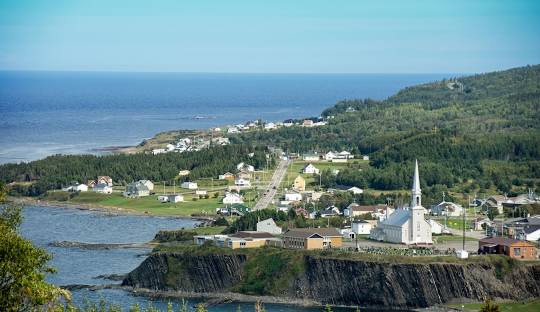
At the eastern extremity of the Gaspé Peninsula, Forillon National Park covers 245 km² between cliffs, boreal forests and the waters of the Gulf of St. Lawrence. Managed by Parks Canada, it combines exceptional natural heritage with human history marked by the expropriation of coastal families at the time of its creation.
Why visit Forillon Park
Forillon brings together three distinct environments in one territory: a terminal Appalachian massif, a mixed forest where maples, birches and firs grow, and a rugged shoreline bordering Gaspé Bay. This diversity explains the park's concentration of wildlife and the appeal of the trails, which lead equally to panoramic views of the open sea, pebble beaches or escarpments inhabited by seabirds.
The site also stands out for its memory. Its creation in 1970 led to the expropriation of over two hundred families, forced to leave villages within the new park boundaries. Their homes were demolished or burned. This history remains visible in the landscape, through preserved buildings and heritage trails.
History of the park and the expropriated families
Forillon National Park was created in 1970, the first national park in Quebec managed by Parks Canada. Its establishment profoundly disrupted the region: over two hundred families were expropriated, their homes demolished or burned, ending generations of coastal life based on fishing and small-scale agriculture.
Forty years later, in 2010, the last expropriated residents finally regained a symbolic right: to freely explore the lands where they were born, without paying an entrance fee. This gesture marked a form of official recognition, however belated, of the harm suffered by the former inhabitants.
Several buildings were preserved and restored to bear witness to life before the park. They now form the heart of the heritage trail, complemented by military remnants from the bay.
What to see and do
Flora and fauna
The mixed forest shelters rare red oaks, growing here at the northern limit of their natural range. On the heights, a few plants of Arctic origin recall the era of glaciation.
On land, moose and black bears inhabit the wooded valleys, while beavers, foxes and coyotes occupy the rivers and clearings. At sea, seals and whales frequent Gaspé Bay from late spring through autumn.
Forillon is home to over two hundred bird species. The cliffs welcome cormorants, guillemots and black-legged kittiwakes; wetland areas, herons and terns. The Harlequin duck, a rare species, finds one of its main nesting sites in North America here.
Trails and outdoor activities
The trail network covers several levels, from easy coastal routes to more challenging forest hikes. The most well-known itineraries lead to Cap-Bon-Ami and Cap-Gaspé, the meeting point between the peninsula and the gulf.
The park also offers cycling, swimming, sea kayaking (independently or with a guide), stand-up paddleboarding, snorkeling, fishing and whale-watching cruises departing from Grande-Grave.
Heritage buildings
- The Hyman general store, a testament to late 19th-century coastal commerce;
- A typical fisherman-farmer house of the Gaspé region, restored to evoke the daily life of families;
- Second World War fortifications, remnants of the defensive system of Gaspé Bay.
Children's activities, storytelling, exhibitions and screenings complement this cultural aspect during high season.
Winter activities
Once snow arrives, a partnership with the Cultural Centre Le Griffon provides access to cross-country ski trails, snowshoe paths and fatbike routes. Some unmaintained itineraries remain accessible to independent visitors, who must ensure their own safety.
When to visit
Peak season runs from June to September, when trails, water activities and interpretation services are fully open. Whales are generally observable from June to October in the bay.
Autumn, though brief, offers mixed forest colors for hiking. In winter, main roads are closed and most services suspended, but the park remains accessible to independent visitors through winter entrances.
Practical information
Entry is free for visitors aged 17 and under. Adults pay a daily or seasonal entry fee according to Parks Canada's current pricing. It's best to consult the official website for up-to-date rates and conditions.
For accommodations within the park, there are campgrounds at Petit-Gaspé, Des-Rosiers and Cap-Bon-Ami, as well as glamping options. Booking is strongly recommended in July-August.
How to get there
- By car: via Route 132 East, which runs along the Gaspé coast. Plan for about 400 km from Rimouski, 700 km from Quebec City and approximately 350 km from the New Brunswick border.
- By coach: regional services connect Gaspé to several Quebec cities, complemented by local public transport to park entrances.
- By plane: Michel-Pouliot Airport in Gaspé is about 43 km from the southern entrance. Car rentals and shuttles available depending on the season.
Nearby attractions
The park often forms the final stop on an itinerary along the St. Lawrence. Nearby, the city of Gaspé allows you to extend your visit with its museum and maritime heritage. Further west, Bic National Park and Hautes-Gorges-de-la-Rivière-Malbaie National Park offer other outdoor experiences in distinct landscapes. For travelers continuing eastward, Gros-Morne National Park in Newfoundland logically completes the crossing.
Frequently asked questions
Frequently asked questions
One day allows you to cover one sector (North or South) with a hike and visits to a few heritage buildings. To explore the entire park and try several trails, plan for two to three days on site instead.
Yes. Seals and whales frequent Gaspé Bay from late spring through autumn. Whale-watching cruises depart from Grande-Grave in season, and certain coastal promontories allow viewing them from land.
Main roads are closed and most services suspended, but part of the park remains open for winter activities (cross-country skiing, snowshoeing, fatbiking) through the partnership with the Cultural Centre Le Griffon.
Entry is free for visitors aged 17 and under. Adults pay a daily or seasonal entry fee according to Parks Canada's pricing structure. Former expropriated residents and their direct descendants have been exempt since 2010.
To incorporate Forillon into a complete itinerary of maritime Quebec or the Maritimes, explore our Canada trips.
Interested in this visit?
We can include it in your personalised itinerary.